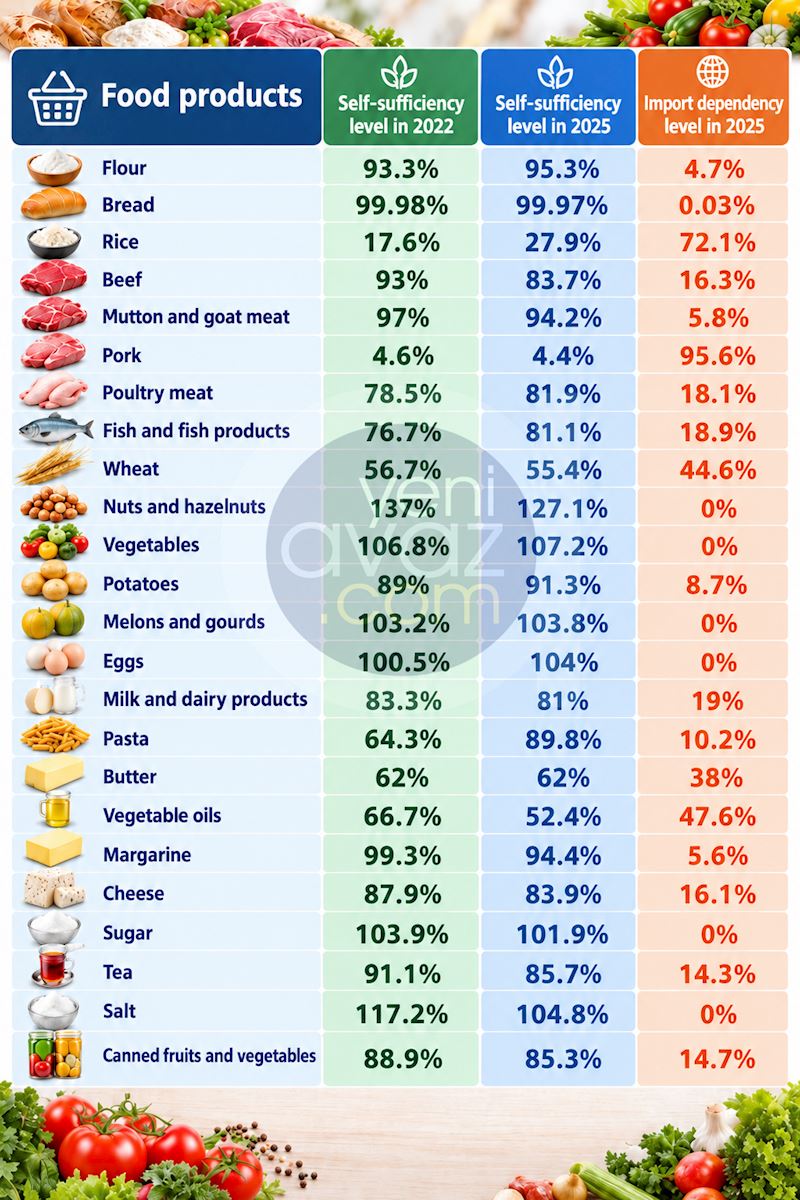
Although Azerbaijan’s level of self-sufficiency in certain food products increased between 2022 and 2025, a decline was recorded in several other products.
Yeniavaz.com reports, citing published official data, that the largest increases were observed in pasta products and rice, while the most significant declines were recorded in vegetable oils and beef.
The level of self-sufficiency in vegetable oils, which stood at 66.7% in 2022, fell to 52.4% in 2025. This represents a decrease of 14.3 percentage points.
The level of self-sufficiency in beef declined from 93% to 83.7%. Thus, a decrease of 9.3 percentage points was recorded over three years.
The figure for nuts and hazelnuts fell from 137% to 127.1%, for salt from 117.2% to 104.8%, and for tea from 91.1% to 85.7%.
The level of self-sufficiency in milk and dairy products declined from 83.3% to 81%, in cheese from 87.9% to 83.9%, and in canned fruits and vegetables from 88.9% to 85.3%.
The level of self-sufficiency in sheep and goat meat fell from 97% to 94.2%, while the figure for wheat declined from 56.7% to 55.4%.
Which Products Recorded the Largest Increases in Self-Sufficiency?
Between 2022 and 2025, the largest increases in self-sufficiency were recorded in pasta products and rice. The figure for pasta products rose from 64.3% to 89.8%, representing an increase of 25.5 percentage points.
The level of self-sufficiency in rice increased from 17.6% to 27.9%. The increase amounted to 10.3 percentage points. Nevertheless, most of the demand for rice is still not met through domestic production.
The figure for eggs increased from 100.5% to 104%, for poultry meat from 78.5% to 81.9%, and for potatoes from 89% to 91.3%.
The level of self-sufficiency in flour reached 95.3%, up from 93.3%. The figure for melons and watermelons increased from 103.2% to 103.8%, while the figure for vegetables rose from 106.8% to 107.2%.
Which Food Products Are We Most Dependent on Imports For?
According to the import dependency figures for 2025, the highest levels were recorded for pork, rice, vegetable oils and wheat.
Import dependency for pork stood at 95.6%, while the figure for rice was 72.1%. This indicator amounted to 47.6% for vegetable oils and 44.6% for wheat.
Import dependency for butter stood at 38%, for milk and dairy products at 19%, for fish and fish products at 18.9%, and for poultry meat at 18.1%.
The figure for beef was 16.3%, for cheese 16.1%, for canned fruits and vegetables 14.7%, and for tea 14.3%.
Which Products Can We Fully Provide for Ourselves?
Last year, there were also products for which the level of self-sufficiency exceeded 100%, meaning that we were not dependent on imports. These included nuts and hazelnuts, salt, eggs, vegetables, melons and watermelons, and sugar.
Murad Mammadov

 Tətbiqimizi yükləyə bilərsiniz