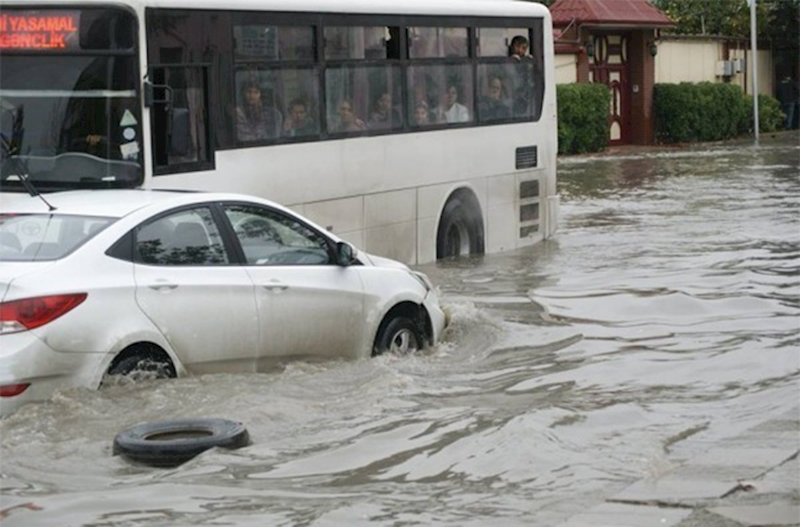
In modern megacities, effective rainwater management has become a global issue of strategic importance, both in terms of protecting urban infrastructure from erosion and preventing flash floods.
As reported by Yeniavaz.com, as urban planning technologies rapidly advance, traditional sewer networks, used for years, are giving way to more complex, sustainable, and environmentally friendly engineering systems.
According to the traditional approach, urban sewerage consists of two main branches: rainwater is directed directly to natural reservoirs, while domestic wastewater is transported to special facilities. However, widespread asphalt paving and intensive concrete pouring in modern cities means that the soil loses its natural absorption capacity. As a result, existing sewer networks are unable to handle the enormous volumes of water that accumulate in streets and squares during heavy rainfall. The "Sponge City" system, which emerged as a radical solution to this global problem and is considered a "green revolution" in modern urban planning, offers a different approach from traditional engineering solutions. First proposed in the early 2000s by renowned Chinese landscape architect and professor at Peking University, Yu Kongjian, this model was adopted by the Chinese government in 2014 as official state policy to combat rapid urbanization and recurring floods. While the classic engineering approach attempts to quickly "drain" water from the city through pipes, the "Sponge City" system focuses on absorbing, storing, and purifying water on-site, mimicking natural processes.
In implementing this system, special porous concrete or bricks are used instead of conventional impermeable asphalt surfaces. This allows rainwater to filter and mix directly with groundwater. At the same time, special depressions created along roadsides and in parks collect the water and allow it to pass through natural filtration processes enabled by plants. Artificial lakes and marshes in the city, on the other hand, store excess water in huge reservoirs, preventing flooding and mitigating the local microclimate.
One of the most successful examples of this innovative approach is the Chinese city of Wuhan, where large-scale reconstruction has reduced the annual risk of flooding by 60-70%. In the Danish capital of Copenhagen, streets are also designed so that during heavy rains, some of them act as "temporary rivers," channeling water into green spaces and artificial lakes.
Murad Mamedov

 Tətbiqimizi yükləyə bilərsiniz