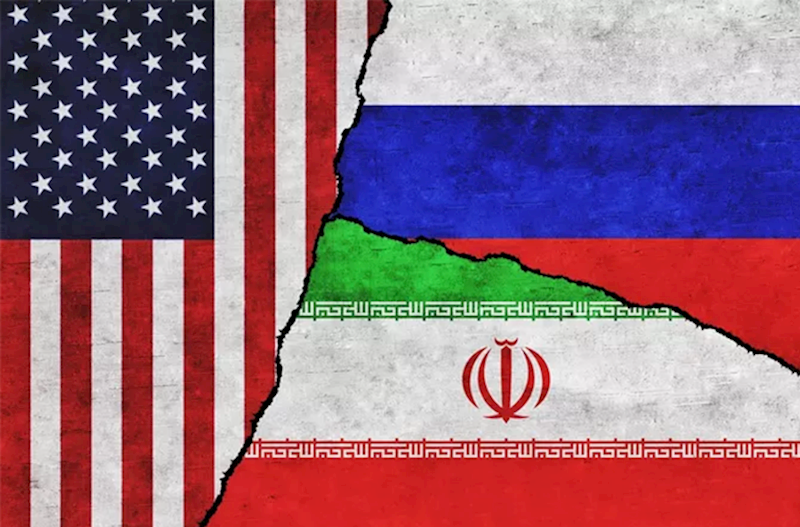
On March 12, the US Treasury Department's Office of Foreign Assets Control (OFAC) issued a 30-day general license permitting limited maritime sales of Russian oil.
As reported by Yeniavaz.com, citing Forbes, the license only applies to oil and petroleum products loaded onto tankers before March 12.
This decision comes amid escalating tensions in the global energy market, particularly around the Strait of Hormuz. Analysts view this as an attempt by the Trump administration to stabilize oil prices.
Experts note that this decision is especially important for third countries, as they will now be able to transact with Russian oil without fear of secondary sanctions.
Oil prices have risen sharply in recent weeks amid heightened tensions in the Middle East. Since the end of February, the price of Brent crude has risen from $70 to over $100.
Analysts believe that additional tanker volumes (approximately 100-130 million barrels) could have a limited impact on the market. A potential blockade of the Strait of Hormuz affects 12-14 million barrels of daily supply. Therefore, a drop in prices below $100 in the near future appears unlikely.
In recent months, exports have reportedly been constrained by India's partial refusal to accept Russian oil. Russia lowered the price of Urals crude by 20% to attract Indian buyers. At the end of February, this was around $14 per barrel. In February, Brent crude was selling for $71, and Urals for $57. Following the OFAC decision, the discount decreased by approximately 9%, or $8.40. Brent is currently trading at $102, and Urals at $93.60.
Russian oil company shares have risen significantly since the sanctions were eased. Rosneft shares rose 27%, Lukoil shares rose 11%, and Surgutneftegaz shares rose 8%.
Murad Mamedov

 Tətbiqimizi yükləyə bilərsiniz