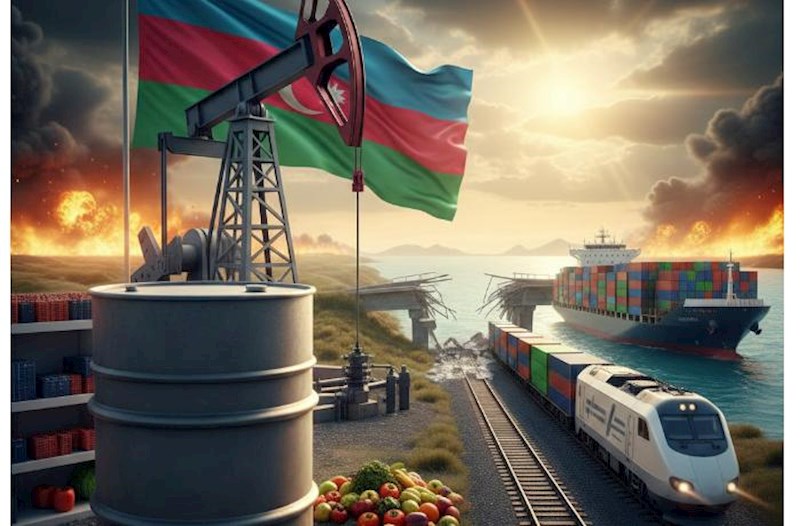
A US military intervention in Iran promises both significant fiscal opportunities and serious structural risks for Azerbaijan.
According to Yeniavaz.com, the first and most acute impact of such a conflict on the Azerbaijani economy will be felt in global energy prices. The possibility of Iran closing the Strait of Hormuz, considered a strategic artery for global oil supplies, and the resulting geopolitical tensions could quickly push oil prices above the psychological threshold of $100-$120 per barrel, directly paving the way for rapid growth in Azerbaijan's export revenues, state budget surpluses, and State Oil Fund assets. While increased foreign exchange flows provide the Central Bank with additional room to maneuver in maintaining the stability of the manat, the disruption to the supply chain hidden behind this positive picture will pose a threat to other sectors of the economy.
Particularly in terms of logistics and transit potential, the International North-South Transport Corridor, in which Azerbaijan has invested heavily over the past decade, could completely lose its functionality, remaining at the center of military operations, leading to a decline in the country's non-oil revenues as a regional transit hub. However, to fill this gap, the Middle Corridor (Trans-Caspian Route), which transports cargo from Central Asia to the West, will acquire greater strategic importance and irreplaceability, increasing the burden on the Baku International Sea Trade Port and railways. At the same time, given the extensive border with Iran and existing economic ties, the disruption of cross-border trade and disruptions in imports of agricultural and construction products will increase inflationary pressure on certain product groups in the domestic market, while import diversification will require additional resources from the state.
From a macroeconomic perspective, the most challenging issue relates to the transformation of the investment climate, as the war in the neighboring country increases the region's risk profile for foreign investors, potentially slowing the attraction of foreign direct investment in the non-resource sector. On the other hand, the risks of a potential humanitarian crisis and refugee influx could impose additional unforeseen costs on Azerbaijan's social protection system and state budget, necessitating a review of fiscal discipline. Ultimately, the analysis shows that, although Azerbaijan's energy resources provide financial security for the country, economic diversification and the implementation of regional projects could face serious obstacles amid the uncertainty caused by the war.
Elnur Ali

 Tətbiqimizi yükləyə bilərsiniz