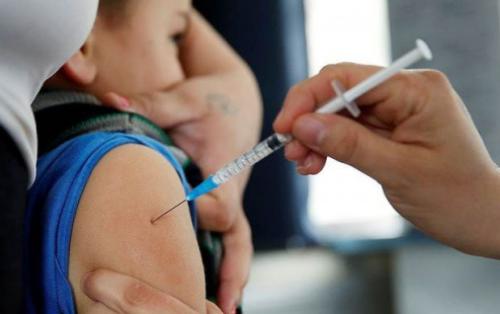
Information has spread that a supposedly vaccinated child in Goranboy died from shock after the injection.
Yeniavaz.com reports that similar information about vaccines is periodically circulated in the press and on social media.
These observed reactions after vaccinations cause concern among parents, leading them to hesitate about vaccinating their children.
At the same time, experts emphasize that vaccines play an important role in protecting children from dangerous infectious diseases.
So, what is the cause of such cases, and what should parents pay attention to when vaccinating their children?
In an interview with Yeniavaz.com, pediatrician Shalala Polukhova stated that the cause of death after vaccination can only be determined after an official medical examination:
"The topic of vaccination is not always clearly perceived by society and is often discussed. Therefore, I would like to point out that in any case of death, the cause can only be determined through a medical examination and an official investigation. Vaccines have been used worldwide for many years. Their safety is constantly monitored by international organizations such as the World Health Organization and the Centers for Disease Control and Prevention."
Shalala Polukhova also noted that allergic reactions after vaccination can occur extremely rarely:
"Serious allergic reactions, including anaphylactic shock, can occur very rarely. Anaphylactic shock usually occurs within the first few minutes or hours after vaccination. This is why vaccinations are performed in medical facilities and under medical supervision."
Shalala Polukhova emphasized that a child's health must be assessed before vaccination:
"First and foremost, a pediatrician should check the child's overall health. If they have already been vaccinated, they should ask whether there was any reaction to the previous dose. A history of severe allergies or anaphylaxis in the family should be investigated. Any underlying immune system issues should also be considered."
According to Shalala Polukhova, in some cases, vaccination can be temporarily postponed:
"For example, if a child has a high fever or a severe infection, vaccination can be postponed." However, mild respiratory infections—runny nose, mild cough, etc.—are not considered contraindications to vaccination in most cases. If a severe allergic reaction or severe sensitivity to vaccine components occurs after a previous dose of vaccination, booster vaccination should not be administered.
The doctor addressed the parents and emphasized the importance of a pediatric examination before deciding on vaccination:
"It is wrong to generalize from individual cases and refuse vaccination. Vaccines are one of the most effective and reliable means of protection against infectious diseases and their serious complications."
Farida Asadzade

 Tətbiqimizi yükləyə bilərsiniz